Sunday, January 9, 2011

Lunch at Il Falchetto

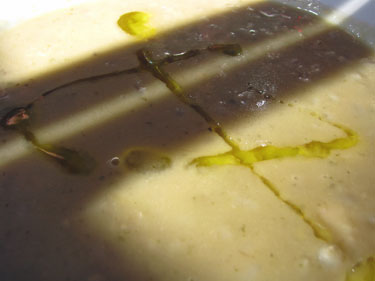
Going in to Perugia recently (as will be detailed tomorrow), I wasn’t optimistic. But one of the best ways, I’ve found, to turn around your feelings about a city or town is to have a good meal there (maybe I think too much with my stomach, but good food tends to make me feel better about most things). Before leaving, with this in mind, I did a little restaurant research and decided that we should try to have lunch at Il Falchetto, which was the top restaurant in the New York Times Perugia restaurant guide (and yeah, I was surprised about that being around, too). And Il Falchetto, or the Falcon (by the way, doesn’t the fact that it’s named “the falcon” automatically make it worth at least trying? I’ve always wanted a falcon, and am a fan of the Falcon), treated us very well, almost 100% well, and ended up being ideal for a chilly day lunch. The biggest stars, I think, were the first courses. I started with Parmigiana di Gobbi, which was like a warm, comforting, cheese-rific, casserole. Casseroles have a spot of their own in my food heart, due to growing up in the casserole decade (the 70s) and developing a fondness for gooey-cheesy-hot dishes, and this one hit the mark with an added bonus: thistle (the “Gobbi” in the title). I’m not sure I ever had thistle before, but it was chewy and green and added extra texture (you can’t see it in this pic):
Nat’s starter may have been even better (and she was nice enough to share): Carmella di Sfoglia ai Porcini, or puff pastry topped with a porcini cream sauce. The puff pastry stayed crisp on the edges, as a counterpoint to the creamy, mushroomy, sauce, and the sauce was so smooth, and with so much flavor, it made a great partner with the pastry:
For my main, I had (at the suggestion of the New York Times by golly) Falchetti Verdi. This was also quite good, but in ordering it and my starter I made a slight tactical error as the Falchetti was another casserole-style number. Luckily, the cold outside made a double helping of casserole comforts not completely out of hand. Also, the Falchetti was fairly different than the Parmigiana, being more tomato-sauced than cheesed-out, and featuring little melt-in-your-mouth spinach-ricotta gnocci:
The only, to us, misstep on the menu was Nat’s next course. And, it wasn’t a misstep, actually, but just somewhat weird to us. She had a risotto (she’s a risotto fanatic a bit--really, it’s starting to get worrisome) with truffles and red wine. It was one of those dishes you see on the menu and think “well, that’s either going to be completely awesome or completely weird” and feel compelled to order. This one fell on the weird side, as the wine (which can be, I think, tricky to cook with--too much quickly overwhelms) didn’t bring out or intermingle with the truffle’s earthiness but added an almost vinegar backend taste. Intriguing color, though:
We brought lunch back to the “scrumptious” side of the tally sheet with our dessert: Chicoria Ripresette (I may be spelling that last one wrong). Or, chicory spiced with chilis and oil. Sadly, my pic didn’t come out, but the chicory was fantastic, bitter, spicy, and bright green. My kind of dessert.

*See more Italian restaurants: Capponi, Nestor's,Nonna Gelsa, Le Capannine di Sommavilla, Calagrana, Trattoria Il Saraceno, L Enoteca Wine Club, Mastro Dante, Bar Fizz, Da Cesari, Calagrana Lunch, al Frantoio

*See all Italian restaurants

Friday, January 7, 2011

Dinner at Bar Fizz (or Why We Made a Good Choice 10 Years Ago)

Last week, as we do at least once a week (or pretty darn close), we went into Bar Fizz for dinner. We often hit up the pizzas there (as detailed in past posts), sometimes getting a pasta, or salad, or the delicious fries. Rarely are we able to take advantage of the specials, which tend to be meaty in the week and seafood-y on the weekend (Fizz is known for the weekend seafood throw downs). We were the first ones in (early Americans) this night, and got to watch as Giuliano (the friendly owner and chef at Fizz) wrote the specials on the board. We were instantly intrigued because one was “Garganelli al pesto.” See, the pesto at Fizz is, I think, rather amazing. They never overdo it, and they never allow it to overwhelm the pasta. When Giuliano walked over to our table, Nat asked him “garganelli che cosa?” Turns out (I guess we should have guessed) garganelli is a type of pasta. To double check, we asked him (after some stumbling a bit, due to our lean grasp of Italian combined with his piccolo amount of English) if it was filled, and veggie, and he was yes, yes, laughing. The second special was lasagna ragu, which is lasagna with meat-y sauce. Nat said “vegetariano” we he started telling us about it, and he said ragu is carne, but then walked back into the kitchen, and talked to the other cook (another very friendly lady), and then came out to tell us that they could make “lasagna tartufo” or truffle lasagna. How nice was that? Just the idea of checking into it was super great. However (cause of course we ordered both specials), the lasagna itself was even better. My first lasagna this trip (most are meat-packed), the Fizz lasagna tartufo was perfecto. The pasta itself was in thin sheets, freshly made (more on this later), and cooked as right as any pasta ever has been. It was layered around a simple mix of black truffle paste and cheese, and not slopped up with excess sauce. This simplicity and non-goopy-ness also allowed the tips of the pasta to crisp just a bit, which I love:
The lasagna was without a doubt one of the best dishes had since arriving, but I don’t want to short shrift the garganelli, which was also delish. The pesto, as mentioned, was fantastic, light, bright moments of basil and nuttiness garbed in local olive oil, and the pasta was also dandy, like penne curled around itself (almost like when people can twirl their tongues) with little ridges, all together making a textured tasty dish:
Overall, a lovely dinner and a lovely evening, and on the way out, as we stopped to pay (we always just walk up to the register on the bar side, following in the footsteps of locals we’ve watch do the same), we told Giuliano (who also steps over to check out football scores, man the bar, and watch the register) how much we liked the pastas in our halting Italian. He told us, in a combination of Italian and his halting English, that it was made today (I thought). When I said, “oh, just made today” he corrected me to let me know that, no, not today, but right when we ordered it. He was--cause he’s that way--smiling and laughing throughout, too. The fact that they made a special dish for us, and that it was lasagna with fresh noodles made right then, and that he’s such a friendly guy, just underlines for me that we made the right choice about 10 years ago when Nat and I (and pals Jeremy and Megan) randomly picked this area to vacation in, and randomly picked a villa managed by Andrew and Marianne to stay in for a week. Sometimes, it’s the random choices that are the luckiest.

*See more Italian restaurants: Capponi, Nestor's,Nonna Gelsa, Le Capannine di Sommavilla, Calagrana, Trattoria Il Saraceno, L Enoteca Wine Club, Mastro Dante, Bar Fizz, Da Cesari, Calagrana Lunch, al Frantoio

*See all Italian restaurants

Thursday, January 6, 2011

Cospaia: Why Hasn’t Hollywood Stopped Here?

When driving the back road (which isn’t the prettiest, but is the only way to see certain things, and is often the most fun) from Citta di Castello to Sansepulcro, you pass by a number of little towns, or hamlets. Perhaps the smallest is just a sign or two on the road, a couple industrial-type buildings, a shop or two, and not much else. It really goes by in a literal blink and is called Cospaia. There is, if you take the turn off right next to the sign pictured to the left, a tiny hill town (see it below), which, if you drive up to it, is pretty enough, but so small as to not even have a bar--outside of the one that’s across the street and next to a small pond, and that bar’s only open in pond season (really, not having a bar is fairly unheard of for any but the most miniscule gathering-of-houses). So (you may be asking, if you’ve read this far) why am I mentioning Cospaia at all? Turns out, this little spot has a very interesting history. First off, smokers, it was the spot where the tobacco was first cultivated in Italy, beginning in 1575. Today, tobacco is a huge crop here (we spent the first month watching the tobacco harvest and trying to pass huge trucks full of tobacco on the road). The impetus for this Cospaia tobacco growing, and where the interest level ratchets up to eleven in my mind, started earlier though, in 1440. Turns out that at this time the Pope (Eugene IV) was in need of a little extra wonga for the church’s coffers (one hopes it was for the church), and so sold Sansepulcro to the Florentine Republic for $14,000 ducats (at this time, Italy was a number of different states, warring and, it seems, trading parts). Somewhat as if, say, Kansas decided to finally sell Kansas City, KS, to Missouri, since Sansepulcro is closer to Florence than Rome. When the sale commenced and the exact lines of what was sold were drawn and figured a small error was made and a 500 meter parcel of land was missed. This land was Cospaia, and once they figured it out, the Cospaiesi declared independence and decided to do away with rulers, taxes, soldiers, laws, pants (for all I know), and realized that maybe tobacco would be worth growing. Soon, they were selling tobacco on every side and generally kicking up their heels. This independence lasted four centuries and may have lasted longer, except that (as you might expect) Cospaia turned into a haven for smugglers, pirates, hippies, and wayward princes looking for a good time. In general, I picture it as a wealthier version of Tortuga (the pirate port in Pirates of the Caribbean, not the real Tortuga). Eventually the party had to end and the man, in this case the Tuscan government on one side and the Papel government on the other, stepped in--on March 25th, 1826, exactly. After this, Cospaia was “assigned” to Citta di Castello. It probably cut down on the boozing and carousing but the tobacco dollars (or ducats) kept coming in longer, as the Cospaiesi were allowed to keep growing tobacco (a half million plants), and to keep selling tobacco at a time when tobacco was kept well in check. Now, with that story told, wouldn’t this make a good movie? Where’s George Clooney when you need him (probably at Lake Como I suppose).

Wednesday, January 5, 2011

Puppies and Persimmons

Some people (I’ve heard) like persimmons. I think they’re icky. Which is a shame, cause there is a persimmon tree in our Italian backyard. In the dog part of the backyard, to be specific (the dog yard, I suppose. The dog domain. Where they run around, chase mice, do their business, wrestle, bark a bit, smell cats, and gnaw on each other. But not the part of the yard where they eat deer droppings. That part we walk by in the mornings. It’s their breakfast buffet, normally). While the persimmon tree doesn’t do anything for me, lately, the dogs are always near it when they’re outside. Even when the persimmons don’t look even close to appetizing in my opinion (it was a little gloomy when I took this pic, but even so, it’s late-ish winter and the persimmons left aren’t looking near to snazzy):
The dogs, see, have developed a persimmon addiction. They love these old persimmons, and usually head straight for the tree when we go into the yard to see which of the twenty or so persimmons left have fallen off since their last visit to the tree:
They’re pretty focused once under the tree with their dish-divine-of-the-moment, with Sookie even licking the persimmon juice and muck from leaves (oh, as an aside, the branches on the ground are mostly from the olive garden . . . wait, I mean the olive orchard, as the branches are pruned olive branches that we drug into the dog yard to help cut down on muddy paws):
And Rory’s developing a strategy for moving rocks around to better find the persimmon remnants (which is a huge step above his developing a strategy for tunneling under the fence to try and get to the little yappy dogs next door, a practice which was his favorite occupation before persimmon-dropping season):
The one downside to all the persimmons? What our German neighbor Doris calls (when she watches the dogs): ka ka. It’s not that the persimmons are bothering them internally (if you know what I mean), but they are, um, going to the bathroom more. And that’s probably enough said (except to add that we do get lots of plastic bags at the markets. So, the bags are being put to good use). The tree doesn’t have a lot of persimmons left, however, and the birds are also pretty excited about their winter fruit experience, so soon I think the dogs soon can again devote more time to what’s important: Doggie Wrestlemania 2011!

Tuesday, January 4, 2011

Lunch at al Frantoio

As mentioned below, we recently spent a great morning and afternoon in Assisi. Naturally, if we were there morning and afternoon, we had to have a stop for lunch in the middle. At home, we’d looked up a couple potential eateries, but completely forgot the piece of paper they were written on. It was a fortuitous and tasty forgetting, though, because we ended up wandering around a bit longer than we probably would have, stopping finally at a place called al Frantoio. At first, we mainly picked it because it boasted a fine and sunny view (it was quite a chilly December day):
The food, though, quickly became the star of the lunch, and the reason we will probably return for more food when taking folks to Assisi. Nat’s sister Christie and mom Carolyn were also with us, which means there are a few meat pics, too (though one warning: the agreeably warm sunlight, while cuddly, didn’t help making memorable photos when shadowing through the windows). I started with an outstanding truffle frittata, which let the earthy truffles take center stage on top of a wonderfully firm-on-the-outside-gooshy-on-the-inside frittata:
Nat started with a rich, creamy and chewy (due to the main ingredients), lush, fava bean and barley soup topped with a small slap of the sharp local olive oil:
For my pasta, I went with the stringozzi (or priest stranglers—maybe an odd choice in Assisi, but wow, it was good, with the pasta at the right stage of chewiness and the stringozzi’s odd shapes adding texture) with chunky meaty fresh porcini:
Nat had homemade tagliatelle topped with a double dose of cheese and a hint of cream:
Christie (after having a pasta similar to Nat’s to start) had (on the waiter’s suggestion—super friendly waiters, by the way) chicken cutlets stuffed with local favorite chestnuts:
while mom went for the serious meat plate, the solo sausages (by all reports--fantastic). Carnivores, start your drooling:
We ended our scrumptious Assisi lunch at Il Frantoio with a caramel panacotta and a chocolate-y cake number that filled us completely up, and had us ready for more frosty sightseeing.
*See more Italian restaurants: Capponi, Nestor's,Nonna Gelsa, Le Capannine di Sommavilla, Calagrana, Trattoria Il Saraceno, L Enoteca Wine Club, Mastro Dante, Bar Fizz, Da Cesari, Calagrana Lunch

*See all Italian restaurants

Monday, January 3, 2011

Assisi Morning and Afternoon

Assisi is a quaint little Umbrian hill town. Well, maybe not so much, as it’s really an internationally known spot, revered by pilgrims, art and architecture lovers, and history mavens. If you don’t know (and I suppose you do, but let me refresh just in case), Assisi is the home of St. Francis, who is the reason for the above-mentioned international magnetism. St. Francis not only started a monastic order, completely changed the church, had a devoted female opposite number (Clare) who also started an order (nuns, naturally), but made friends with animals. I’ve tried to think of how to make a modern parallel to St. Francis, but it’s impossible. It’d be as if Paris Hilton gave up her worldly possessions in front of her parents and the country’s most famous governor, devoted herself to charity, chastity, poverty, and obedience, changed the way the US government operates and thinks (the church was at least this impressive and important at the time), and inspired a horde of followers to devote themselves to the same ideals, including one of her rich boyfriends. After she died, her selflessness would then inspire others to build an otherworldly-lovely monument, decorated on the inside by the top artists of the day. Unimaginable. But that’s what St. Francis was like, in hindsight. And Assisi is a reflection of this, if one that’s a bit touristy and more ornate than he would have ever approved of, I suppose. But beautiful, indeed. Not every building and brick is focused on St. Francis and Clare, though. The first church I always see when entering Assisi proper (because I always park in the same cark park—hey, I’m easy) is actually the Cathedral of San Rufino, named for a 3rd century illustrious bishop. Like most churches, no pics are allowed inside, so I can’t show you the baptismal font where Clare and Francis were baptized, but I can show you the front façade of the church, which dates back to the 12th century and is starkly handsome:
From there, it’s a short windy walk to St. Clare’s. Not as ornate as St. Francis’ big basilica, Clare’s church is still a charming, and more relaxed in its visual wonders, spot:
one that also presents, when sitting on or looking over the wall, delightful views of the Umbrian countryside (a fitting spot for Clare to be buried beside):
It’s helpful when strolling the streets and cozy brick and stone corridors to take a side path here and there away from the shops and shoppes with their products from China (okay, there are some that are truly Italian, especially one or two full of hand-carved olive-wood products) to get a grasp of how Assisi must have been a delight to wander (not that it isn’t now, but to wander it when bereft of crowds would have been something else entirely—which is why getting away from crowds here and there is good):
In the middle of Assisi is the Piazzo del Comune, where the Temple of Minerva (now called the church of Santa Maria sopra Minerva) holds court. A step back from the Renaissance into the Roman age, the columnar front of the church is perhaps the best example of Roman columns outside of Rome:
The church inside has been completely re-done in a baroque style that’s worth viewing with its garish charms. However, it’s nothing like the main Assisi event, the take-your-breath-away Basilica of St. Francis:
Honestly, there’s something about Assisi and the Basilica that amazes me more than heroically artistic cities I love such as Florence. Not that I think it’s more worthy, or has better art, etc. It’s just that I would expect a historically powerful and financially important city such as Florence to overwhelm. But Assisi is different--it’s done up because of one man (and his followers, but inspired by him). The Basilica is a reflection of the devotion he inspired. Again, no indoor pics, but it’s like two galleries on top of one another, with the top an airier, lighter, monument to his life and to the art of Giotto (thanks to Giotto’s series of frescos about St. Francis’ life, frescos which run along the sides), and with the bottom church a darker, but not dreary, array of allegorical, historical, and splendid artworks by a number of the top hot artists of the time. It was a cold day when we were there recently, but clear, and blue-skied, providing the opportunity for some bundled up, but still amazing, viewing of this town’s signature artistry, not to mention the town itself, perched on the foothills of Mt. Subasio: